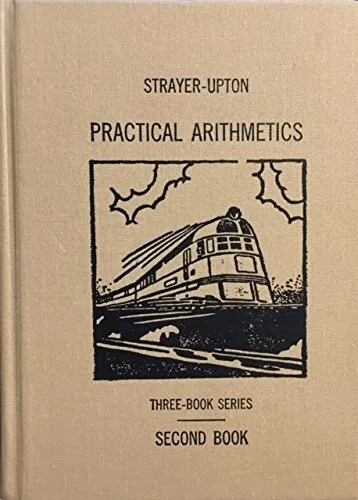
Strayer-Upton Practical Arithmetics
George Strayer · 1934 (Mott Media reprint) · Ages 8–14 (Grades 3–8)
Real-world arithmetic from 1934, when 'practical' meant problems about lumber, farming, and household budgets. Not contrived word problems about trains.
~$40
Overview
Real-world arithmetic from 1934, when 'practical' meant problems about lumber, farming, and household budgets. Not contrived word problems about trains. The applied-math complement to Ray's more abstract approach.
Strengths
- •Word problems are useful. Kids learn math as a tool, not a ritual
- •Bridges vintage rigor with concrete real-life application
- •Inexpensive single volume covers grades 3–8
- •Pairs cleanly with Ray's Arithmetic (Ray's = abstract; Strayer-Upton = applied)
Limitations
- •1934 examples. Monetary values and contexts are dated
- •Black-and-white text, no color or design appeal
- •No instructor's guide. Parent must work problems first
- •Out of step with modern Common Core ordering
Best fit for
- •Families pairing a vintage spine with one practical-application volume
- •Kids who ask 'when will I ever use this' constantly
- •Pods running a real-world economics-and-math unit
The honest read
Use it alongside something more sequential. Strayer-Upton is the word-problem injection, not the curriculum. The 1934 references (coal, dairy, dressmaking) are not bugs; they are openings for the kind of cross-disciplinary conversation you can't get from a modern textbook.
Get Strayer-Upton Practical Arithmetics
Real-world arithmetic from 1934, when 'practical' meant problems about lumber, farming, and household budgets. Not contrived word problems about trains.
SHOPRelated in Math
Strayer-Upton Practical Arithmetics
~$40